The Three Jewels 2025

“In a spiritual sense bondage is subjection to oneself. True freedom, therefore, consists in freedom from oneself.” – Sangharakshita

An immersion into the full architecture of a Dharma life – a human life, in fact. The text unfolds through the triad of Buddha, Dharma and Sangha, with teachings that can momentarily lift the veils. Exploring the overall approach, with a particular emphasis on the Dharma section, this retreat weaves together meditation (using specific meditation techniques), discussion and ritual readings to bring us more deeply into Bhante’s perspective and presentation of the Dharma.

If you find this resource helpful, please consider donating to allow us to continue producing quality Dharma content.
Day 1

Dedication Ceremony

Saddhanandi leads a dedication ceremony after a short introduction in to how she sees the importance of The Three Jewels as a Buddhist text.

Day 2

Teaching session

Saddhanandi summarises the early life of Sangharakshita, and the encyclopaedia commission that lead to The Three Jewels being written. She talks about it being one of the few substantial Dharma books in print in English at the time it was written, and that it’s a way to get in touch with Bhante personally, not just the information in the text. There are two periods of meditation in this session.

meditation

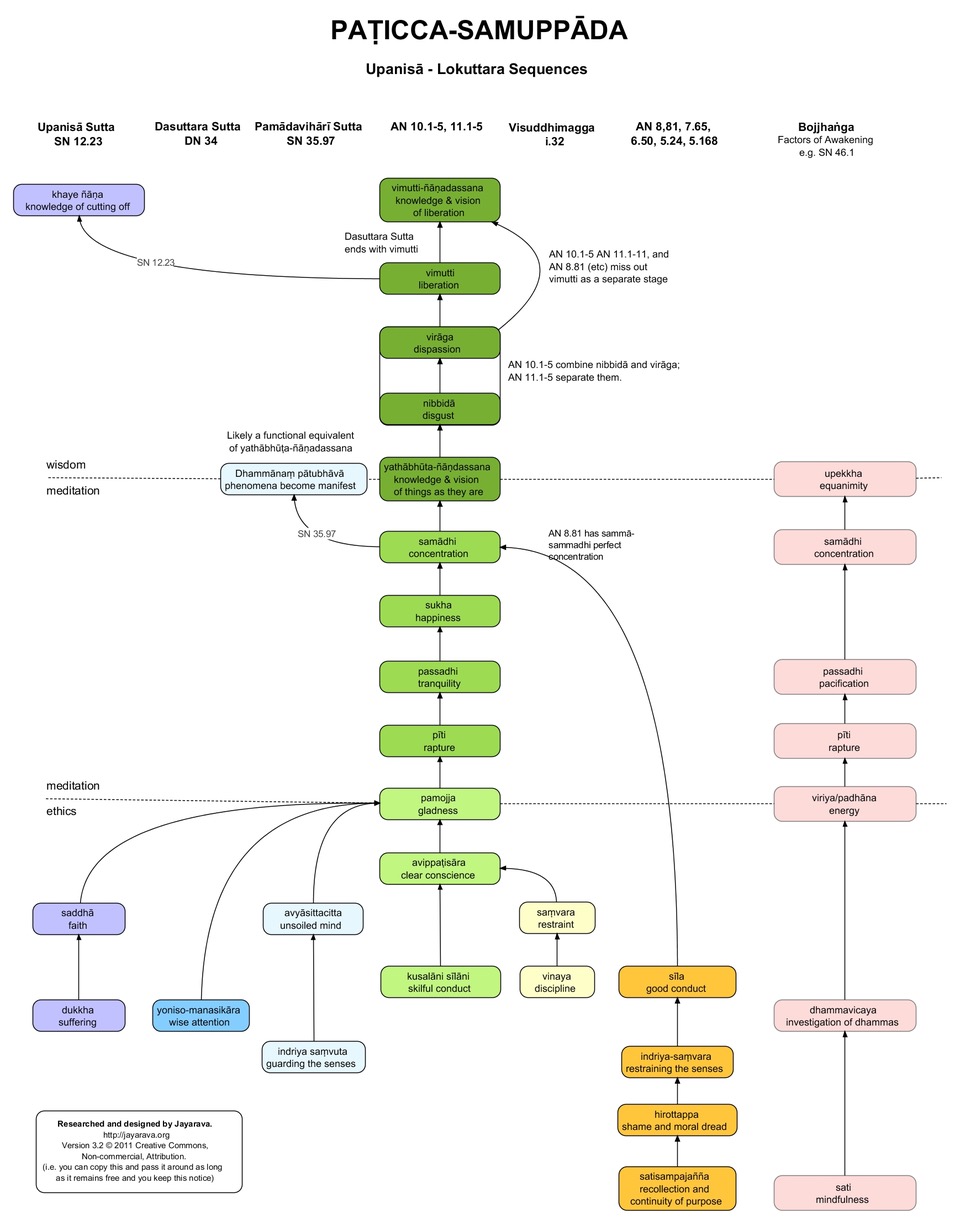
Dhammarati briefly introduces the next retreat phase focused on the nidanas, links it to earlier reflections on why we practise, and then guides participants into a short mindfulness-of-breathing meditation grounded in intention, awareness, and reconnecting with the value of practice.

puja

Vimalachitta reflects on how heartfelt connection—sparked by earlier teachings and expressed through ritual—can open deeper receptivity beyond intellect, then introduces and leads a devotional three-fold puja.

Day 3

Teaching session and meditation

Saddhanandi covers more ground on the chapter on the Human Situation. She considers where dukkha shows up in our lives; what we are “rooted in” and what we need to let go of; where are we drawing our nourishment from, and where do we harden up around opinions?

Meditation

In this session with Dhammarati, the focus shifts to the psychological mechanics of the “ego” and the practical conditions that allow for a transition from contraction to expansion.

Puja

Vimalachitta reflects on the day’s deepening practice and themes of opening and letting go, then introduces and leads a ritual to help participants symbolically release clinging through contemplation, chanting, and meditation.

Day 4

Teaching session

Dhammarati picks up on the Dharma section, and starts with the Buddha’s initial formulation of what it is he needs to communicate post-Enlightenment. Session ends with the Bodhichitta Practice.

Meditation

Saddhanandi introduces and leads a meditation talking and sharing quotes from Bhante of how we can bring a different attitude to our meditation.

sevenfold puja

Vimalachitta reflects on the day’s teachings and the beauty and clarity of the Dharma, then introduces and leads an extended sevenfold puja centred on cultivating bodhicitta through ritual, chanting, readings, silence, and collective devotion within the retreat.

Day 5

Teaching Session and Meditation

Dhammarati describes how when the mind is open and attending, the positive nidanas naturally arise. He takes trouble to emphasise the emotional tone and pleasure that’s present. He then leads a session of anapanasati based on this.

Meditation

Sadhanandi gives a reading from Larry Rosenberg on the subject of silence, and leads an unguided meditation.

Sevenfold Puja

Vimalachitta leads a sevenfold puja after a short period of meditation and a reading of the poem “Hokusai says”.

Day 6

Teaching session and meditations

Dhammarati looks at the two positive nidanas of samadhi and yathabuthajnanadassana, interspersed with meditation.

teaching and three sessions of meditation

Dhammarati explores the transition from the internal insight of Anatta to the external expression of compassion.

Puja with Dhammarati

A meditative read through of the Cetana Sutta.

Day 7

Teaching and Order Sadhana

Saddhanandi looks at sangha in terms of setting in motion a natural process of growth, and as a high quality of individuality and communication. We explore this mythical through the Order Sadhana.

The last two nidanas and shakyamuni visulaisation

Dhammarati winds up by returning to look at the last two nidanas, and ends with a visualisation of Shakyamuni Buddha.

Rejoicings and sevenfold Puja

Thank yous and rejoicings from Ksantikara, followed by a puja lead by Vimalachitta. Ends with chanting that leads on out to Sangharakshita’s burial mound, and silence in the shrine room.

English (UK)